


Summary
How we talk about death and dying is key to promoting understanding and helping people feel more comfortable with the topic. At Southern Hospice Group, we’re updating our guidance on this for all colleagues. We asked Jane Whitehurst, our medical director, why clarity and consistency are important around this sensitive subject.
Should we always use the term ‘died’ in a hospice setting, or is it ever ok to use euphemisms such as ‘passed away’ or ‘at rest’? Is it acceptable to say someone ‘lost their battle with cancer’, or are there better ways to describe their death that honour how they lived? These are questions we’re often asked in our hospices – by families, by professionals and in relation to communications about our services.
Why words can feel so difficult
For many people, talking about death is uncomfortable, even frightening. As a society, we often avoid the word death altogether, using softer phrases instead such as ‘passed on’ – or even old sayings like ‘bit the dust’.
But avoiding clear language doesn’t always make difficult conversations easier. In fact, it can sometimes make them harder. In hospice care, language shapes how people understand what is happening, how safe they feel, and how much trust they have in the care and information being shared with them.
Jane Whitehurst, medical director at Southern Hospice Group, says: “When people are already dealing with shock, grief or uncertainty, unclear language can add to confusion. Clarity isn’t about being blunt – it’s about being kind.”
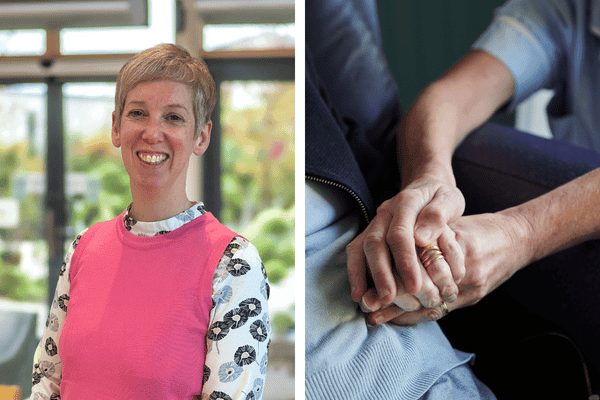
Medical Director Dr Jane Whitehurst
‘Died’ versus euphemisms
At our hospices, we encourage the use of clear, simple words such as ‘died’ and ‘death’ rather than euphemisms such as ‘passed away’. There are good reasons for this. Euphemisms can be misunderstood, particularly by children, people with learning disabilities, or anyone under a lot of emotional stress. Phrases such as ‘at rest’ can be confusing rather than comforting. Also, for people who do not have religious or spiritual beliefs, euphemisms such as ‘passed on’, which allude to passing on to another realm, may feel inappropriate. Clear language helps people understand the reality of what has happened, which is an important part of processing loss.
That said, we also recognise that language is personal. Some people strongly prefer softer wording, especially when speaking about their own beliefs, culture, or faith. Others find the word ‘died’ too stark. What matters most is listening and responding with respect. For these reasons, we do not change the personal language used by patients and families in our hospice stories and quoted comments.
We choose life-affirming phrases such as ‘lives with’ rather than ‘suffers from’ in relation to illness. And we use ‘died from’ rather than ‘lost their battle with’. Referring to a long illness as a battle lost can feel disrespectful to those who faced the challenge with strength and dignity. Instead we focus on the courage it takes to live with a life-limiting illness and on the living that person did before they died.
“Our starting point is clarity, but our priority is always the person in front of us,” says Jane. “That’s why we take the time to find out what matters most to individual patients and their loved ones. We want to ensure that families can spend precious time together, making memories and doing the things that bring joy and meaning. Because when someone dies, how they lived and how they are remembered is so important.”
Tone of voice matters as much as words
The words we choose are only part of the picture. How we say them – our tone, pace and body language – can make a big difference to how they are received. In hospice care, conversations about death and dying should feel calm, unrushed and compassionate. We aim to speak in everyday language, as we would to a friend or family member, rather than overusing technical or clinical terms. This doesn’t mean avoiding difficult truths. It means explaining them clearly, honestly and with care.
How much medical detail is helpful?
Another common question is how much medical information to share. Some people want a detailed understanding of what is happening in their body and what to expect as death approaches. Others don’t. During times of stress, it can be hard to take in complex information, especially when it’s full of medical terminology.
Our approach is to:
- start with simple explanations in plain English.
- check understanding regularly.
- offer more detail if people want it.
- be honest about uncertainty.
We avoid overloading people with information all at once, and we always make space for questions – including questions that might feel difficult or uncomfortable.
“Medical accuracy is important, but so is accessibility,” Jane explains. “If someone can’t understand what we’re saying, then we’re not communicating well.”

Sharing practical information
When someone they love is dying, people often tell us they want practical information as much as emotional support.
They may ask questions such as:
- what will happen next?
- what changes should we expect?
- who can we contact if we’re worried?
- what support is available for family and friends?
Clear, straightforward answers can be reassuring. Avoiding these conversations for fear of causing distress can leave people feeling more anxious and alone. As a hospice group, we aim to share information in a way that is honest, sensitive and timely – without making assumptions about how someone should feel.
Language reflects our values
During Dying Matters Week, we want to encourage more open, honest conversations about death and dying – not just in healthcare settings, but in families, communities and workplaces too. Using clear, respectful language helps break down taboos and reminds people that talking about death is a normal part of life.
At Southern Hospice Group, our language reflects our values: caring, connected and courageous. We know these conversations are never easy, but we also know that thoughtful communication can make a real difference.
“Talking about death can help people feel heard, supported and less alone. Although we have set guidelines for our hospice staff, please don’t worry about the language you use around death and dying. What’s more important is talking about this sensitive topic in a way that feels right for you and those you love and care for.”
…………………………………………………..
Further resources
- Resources for carers (Martlets)
- How to talk about death and dying (Martlets)
- Preparing to say goodbye (Martlets)
- Bereavement support (St Barnabas House)
- Dying Matters Week (Hospice UK)